

The next phase of American manufacturing
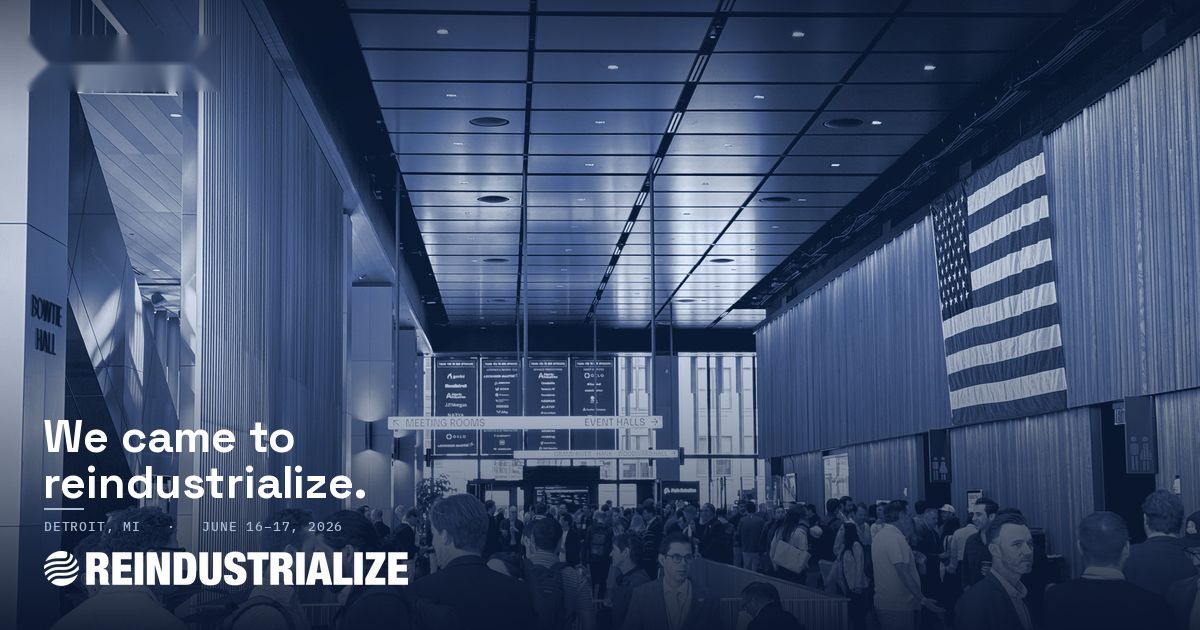
This was our third Reindustrialize, and it was the most impactful one yet.
Sustainment has been part of this conference since it started as a small gathering a few years ago, and it has been really fun to see the community grow.
Companies that were raising pre-seed and seed rounds two or three years ago are now closing growth rounds, putting real technology into production, scaling their operations, and serving the country and our warfighters in tangible ways. We are past the “wouldn’t it be great if we built things in America” stage. This year’s event in Detroit was full of people getting after it with capital, skill, and grit.
Reindustrialize is one of my favorite gatherings of the year. It’s one of the only places you’ll find technology founders, investors, policymakers, Department of War executives, and second- and third-generation manufacturers in the same room. Those conversations don’t happen anywhere else. A few attendees called it the Super Bowl for defense manufacturing, and that’s about right.
What we heard at Reindustrialize
The most useful ideas at an event like this rarely come from the main stage. They come from the edges: the dinners, the side events, the moments between sessions. One theme stuck with me, as several of the more mature hardware CEOs talked about how hard it is to scale. After the growth round, you almost have to build a second company to get from 10-unit prototypes to 10,000 units in full-rate production: new processes, new facilities, and often new people.
Our contribution this year was a report. We partnered with NAIA and Reindustrialize to produce America's New Industrial Blueprint and put it in the hands of all 1,500 attendees. The data came from 100 executives of small and medium-sized manufacturing businesses across the country that use the Sustainment platform. We asked about growth, bottlenecks, and the pressures they’re under: tariffs, workforce, financing, capital investment, and the generational ownership transition working its way through the industry.
A few findings worth noting from the report:
- Tariffs driving increased domestic spending: 71% of respondents increased their spend with U.S. suppliers.
- Critical supply chains remain at risk: 80% of respondents still rely on international suppliers for at least one critical input.
- Huge opportunity for new capital: There is a generational turnover happening in manufacturing, as 53% of respondents plan to exit or transition their business within the next 5 years.
These findings aren't abstractions. They map directly to the daily operations of the businesses we work with, and they are exactly where these manufacturers need the rest of us to show up.
Where Sustainment fits in the future of manufacturing
Another signal from this year was the emphasis on supply chains, not as a cost center to manage down, but as the infrastructure that determines whether a manufacturer can actually scale.
At Sustainment, we work with high-growth manufacturers who are raising capital and building real production capacity. We help them scale by building and managing the strategic supply chain relationships that growth depends on. Our platform enables supply chain teams to engage suppliers, coordinate work, and make better decisions faster, so growth doesn't stall behind a supply chain run on paper, spreadsheets, and inboxes.
Our bet on American manufacturing and the broader global shift towards more localized supply chains was never really about any one company. And it’s no longer really a bet. The capital is real, the demand is rising, and the people building toward it are there, putting in the time and pain to build a more resilient industrial base.
What is left to settle is whether we as a country can build the enabling infrastructure to match the ambition. That is the work in front of all of us: in technology, in policy, in capital, and on the factory floor.
We are committed to doing our part.